


Control and monitoring of heating cables
For larger and process-critical systems, Newtronic supplies complete control panels based on the Thermon Genesis Controller.
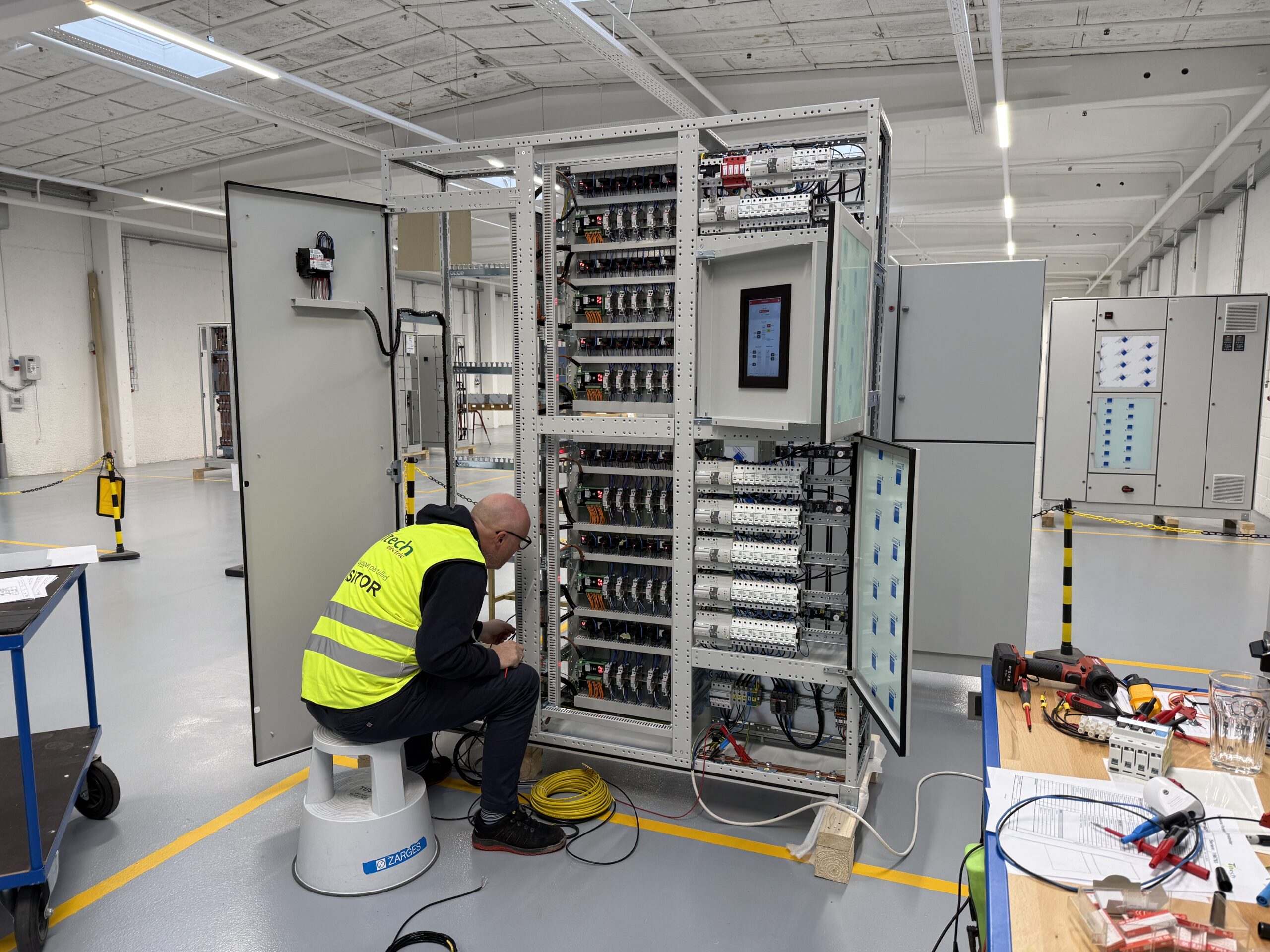
The system brings together temperature control, monitoring, alarms and operating data for the heating cables in one solution. We supply the Genesis equipment pre-assembled in control panels, tailored to the specific system and the number of heating circuits. The solution includes system setup and configuration as well as commissioning on site, so functions, temperature sensors, alarms and communication are tested together with the completed heat tracing installation.

Control panels for heating cables with central control and monitoring
Temperature sensors and multiple measurement points
Genesis Controller uses addressable RTD temperature sensors. Up to 20 RTD sensors can be connected to a single heating circuit, which is relevant, among other things, for long or process-critical pipe runs where the temperature needs to be monitored at multiple points.
Sensor placement is also crucial for correct control. A line-sensing sensor should be placed at a representative point on the process pipe and not, for example, directly at a pipe support, pump or valve, where local heat or cold losses can affect the measurement.
HMI with alarms, history and documentation
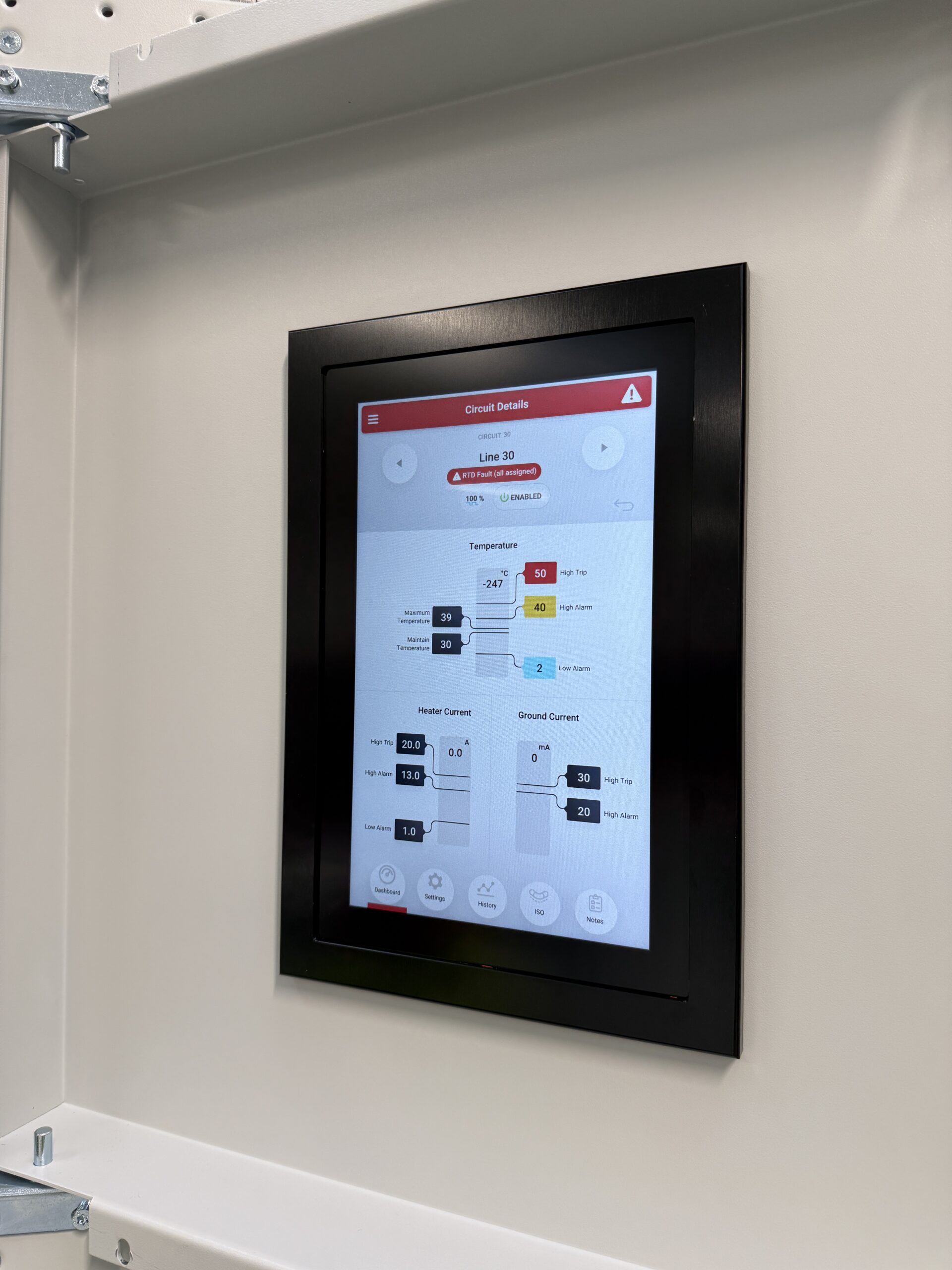
From the Genesis system’s HMI, the operator can see the status of the heating circuits and drill down into details for each circuit. This includes temperature, current, earth leakage current, setpoints and active alarms.
This makes it possible to analyse trends over time and can be useful for troubleshooting and preventive maintenance. In addition, isometric drawings can be displayed directly for each heating circuit on the HMI.
Communication
Genesis Controller has Ethernet communication and supports Modbus TCP/IP, so information from the heat tracing system can be integrated into the overall control system.
From engineering to commissioning on site
We do not supply the Genesis Controller as a standalone component. The control panel is built and configured for the specific heat tracing project.
We handle the setup of circuits, temperature sensors, setpoints, alarms and relevant communication functions. During commissioning on site, the system is checked together with the completed installation, so heating circuits, sensor locations, signals and control functions work as engineered.
This gives you, as a customer, one complete solution for control and monitoring of heating cables—from engineering and panel building to setup and commissioning on site.
Experience Genesis in our Tech Center
Visit our Tech Center and see a Genesis controller in operation. Here you can see functions, control and operation up close and get answers to technical questions.
Contact us to arrange a demonstration.

Products you may also be interested in


FAQ
Yes. With individual monitoring of heating circuits, the operator can see the status of each circuit instead of only monitoring the entire system as a whole. Depending on the setup, parameters such as temperature, current, earth leakage current and alarms can be monitored. This makes troubleshooting easier and can help detect problems before they lead to inadequate temperature maintenance or downtime.
A Thermon Genesis Controller can handle up to 72 individual heat-tracing circuits. This makes the system suitable for larger heat tracing systems where many circuits must be controlled and monitored centrally from one solution.
Yes. The Genesis system can be connected to multiple temperature sensors on the same circuit. This may be relevant on long or process-critical pipe runs where the temperature needs to be monitored at multiple points. The system supports up to 20 addressable RTD sensors per heat-tracing circuit.
Yes. The Genesis Controller supports Ethernet communication and Modbus TCP/IP. This makes it possible to integrate relevant temperatures, operating status and alarms from the heat tracing system into the customer’s overall control system.
During commissioning, the control panel is checked together with the completed heat tracing installation. This includes, among other things, heating circuits, temperature sensors, setpoints, alarms, signals, and relevant communication functions. The purpose is to ensure that control and monitoring operate as designed before the system is put into normal operation.


