


Categories
Automation for safe and precise temperature control

Automation as part of the overall heating solution
Temperature sensors for control and safety
The temperature sensor is the basis of the control system. An incorrect sensor type or placement can result in slow control, inaccurate measurements or insufficient protection of the heating element and the process.
We supply, among other things, PT100 sensors, thermocouples, surface sensors, cable sensors and sensors with a temperature transmitter. The sensor is selected based on temperature range, measurement accuracy, medium, response time and installation conditions.
Integration with PLC, supervisory control system and SCADA
The automation solution can be integrated with your existing plant via analogue and digital signals or industrial communication protocols such as Modbus, Profinet and Ethernet-based connections.
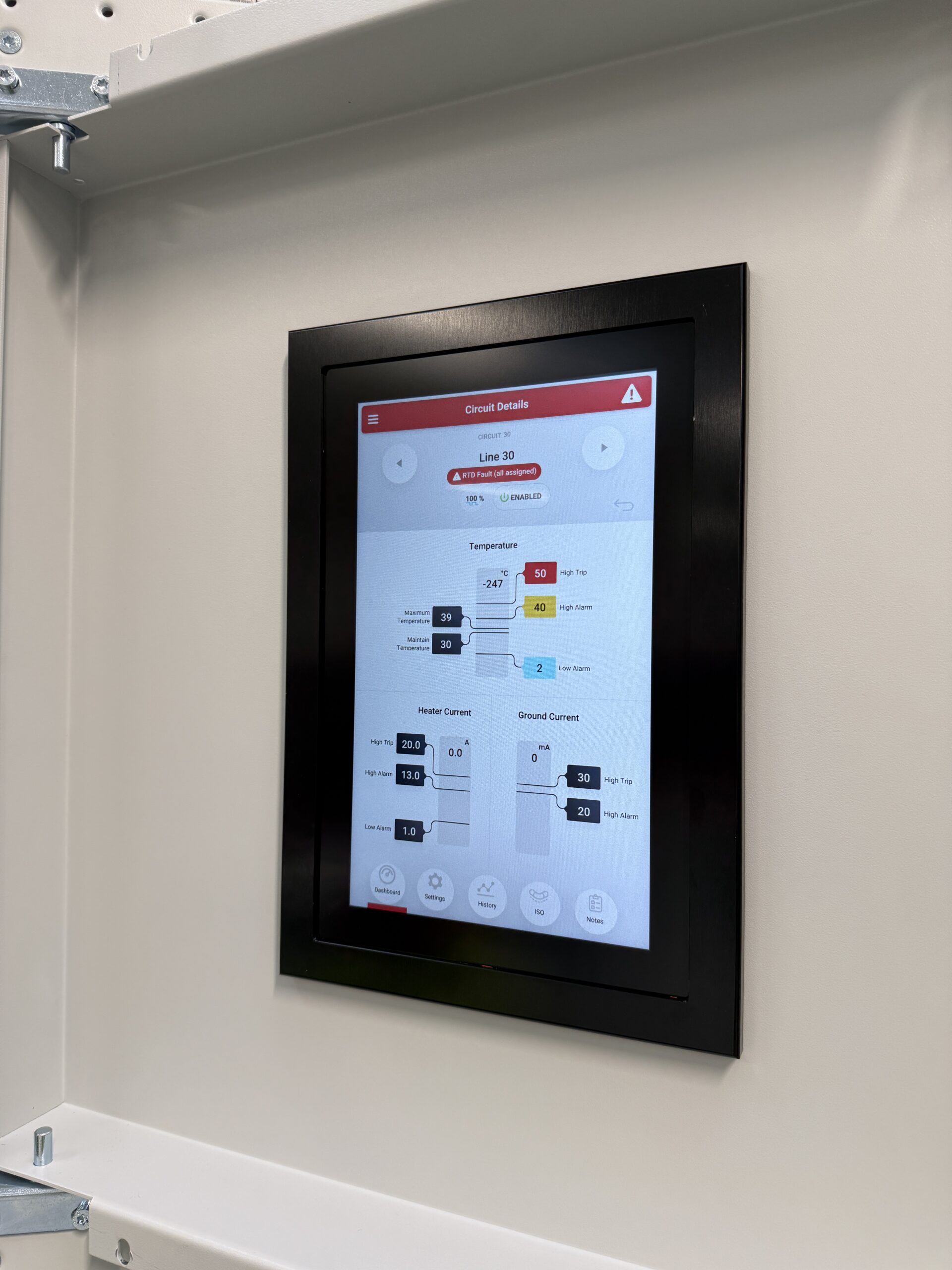
Integration can provide access to temperatures, setpoints, alarms, power consumption and operating status. This makes it possible to consolidate process data in the customer’s PLC, supervisory control system or SCADA system and supports monitoring, troubleshooting and energy optimisation.
Communication is clarified early in the project so that signals, addresses, alarms and responsibility boundaries are clear before the panel is produced.
Sizing, documentation and commissioning
The right automation solution depends on more than the total power. We clarify, among other things, temperature requirements, number of heating zones, load type, supply conditions, safety level, sensor placement and the need for data collection.
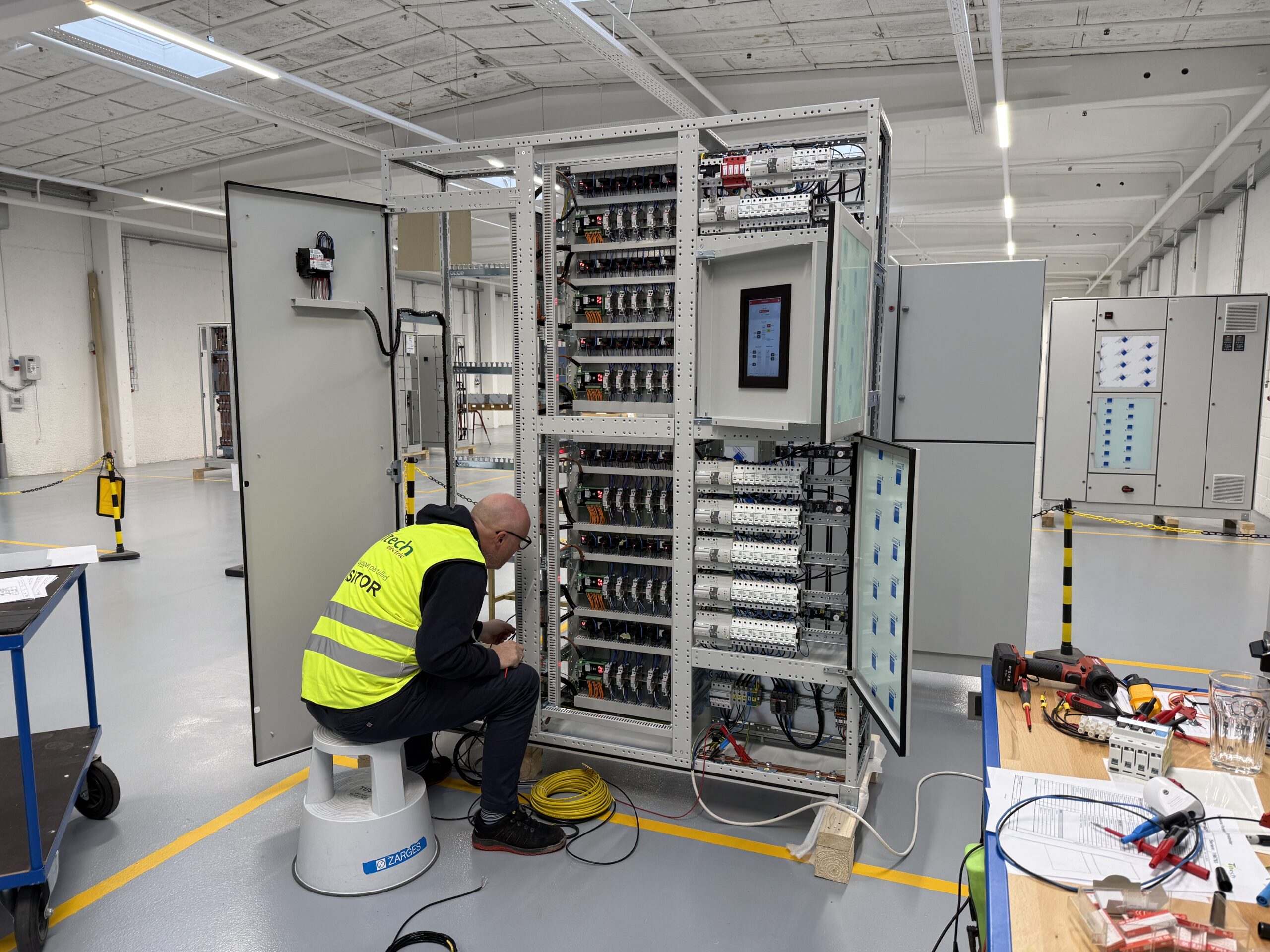
The solution is delivered with relevant panel documentation, diagrams, component lists and functional descriptions. We can also assist with installation, commissioning, tuning and subsequent service.
The goal is a reliable solution where the heating element, temperature sensor, power control and control panel function as one integrated system. This reduces the number of technical interfaces and makes the plant easier to operate and maintain.
Have the automation sized for your process
Do you need a control panel, power controller or temperature sensor for an industrial heating solution?
Send us information about power, voltage, temperature requirements and the desired control function. We assess how the automation is best integrated with the heating element, the heating cables and the rest of the plant.
Approvals




Most frequently
asked questions
It depends on the process and how precisely the heat needs to be controlled. A simple installation can often be regulated using a temperature sensor, thermostat or controller, and contactors. For higher outputs, multiple heating zones, or high requirements for temperature stability, there may be a need for power controllers, PLC, HMI, and a complete control panel.
Contactors are suitable for simple on/off switching of heating power. A power controller is relevant when the power needs to be regulated more precisely or quickly, for example with high heat loads or processes that require a stable temperature. The choice depends, among other things, on the heating element, the power, and the process requirements.
Yes. Temperatures, setpoints, alarms, power consumption, and operating status can be integrated with the customer’s existing automation system. This can be done via analogue and digital signals or communication protocols such as Modbus and Profinet. Communication requirements and interface responsibilities should be clarified early in the project.
Where the process requires it, safety functions must operate independently of normal temperature control. This may include, among other things, separate overtemperature protection, flow monitoring, level protection, fault alarms, and a safety shutdown. The specific safety solution depends on the heating element and the risks in the process.
Yes. A control panel can be configured for multiple separate heating zones with individual temperature measurement, control, and monitoring. This is relevant when different parts of a plant require different temperatures or power levels. The zones can also be consolidated into a single HMI or integrated with the customer’s overall control system.
